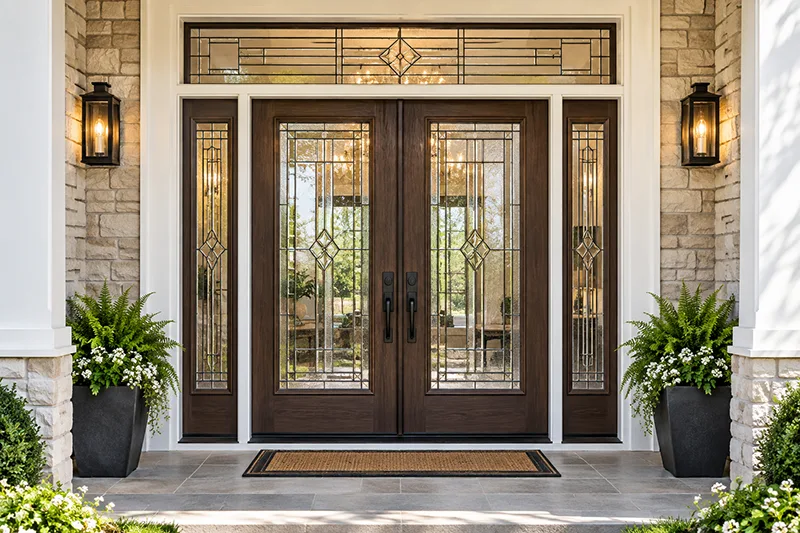

Choosing a new entry door involves more than selecting a color, glass style, or material. One of the biggest decisions homeowners face is whether to install a single entry door or double entry doors.
Both configurations can create an attractive entrance, but they work best for different homes, entryway sizes, architectural styles, and everyday needs. A single entry door can provide a clean, versatile appearance while making efficient use of available space. Double entry doors can create a wider, more dramatic entrance while making it easier to move large items into and out of the home.
Understanding the differences between the two can help you choose an entry door configuration that complements your home while improving functionality, curb appeal, security, and energy efficiency.
Choosing a new entry door involves more than selecting a color, glass style, or material. One of the biggest decisions homeowners face is whether to install a single entry door or double entry doors.
Both configurations can create an attractive entrance, but they work best for different homes, entryway sizes, architectural styles, and everyday needs. A single entry door can provide a clean, versatile appearance while making efficient use of available space. Double entry doors can create a wider, more dramatic entrance while making it easier to move large items into and out of the home.
Understanding the differences between the two can help you choose an entry door configuration that complements your home while improving functionality, curb appeal, security, and energy efficiency.
A single entry door consists of one operable door panel installed within the entryway. It is the most common front door configuration for residential homes and works well with traditional, Craftsman, ranch, contemporary, transitional, and many other architectural styles.
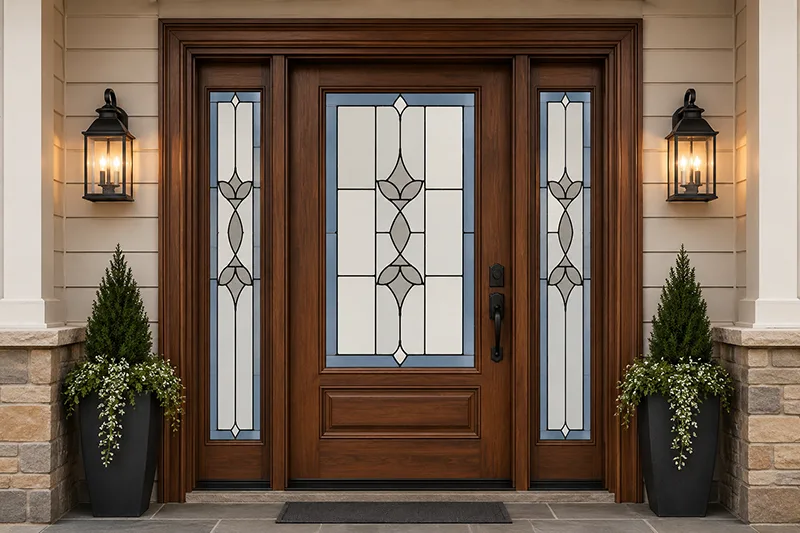
Single doors can be customized with decorative glass, clear glass, privacy glass, sidelites, transoms, hardware, grille patterns, and a wide selection of colors and finishes.
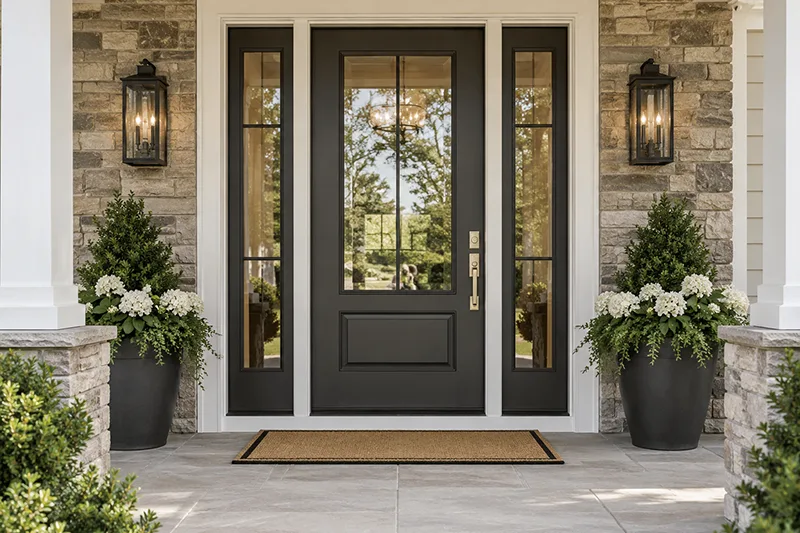
Homeowners who want additional natural light or a wider-looking entrance can also combine a single door with one or two sidelites without installing a full double-door system.
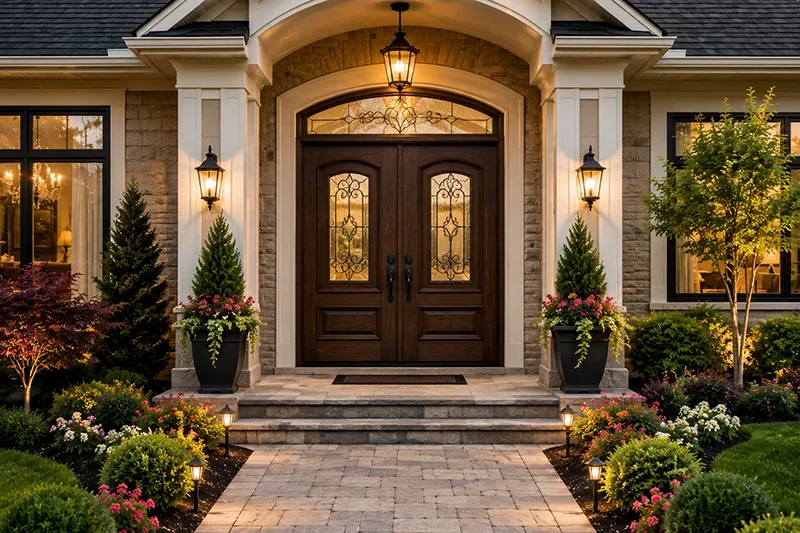
Double entry doors feature two door panels positioned side by side. Depending on the configuration, both panels may open, or one may serve as the primary operating door while the second panel remains secured until additional opening width is needed.
Double doors are frequently used on homes with larger entryways and can create an impressive architectural focal point.
They are especially useful when homeowners want a wider opening for furniture, appliances, large décor, or gatherings where additional entry space may be helpful.
Single and double entry doors can both provide excellent performance when properly selected and professionally installed. The better choice depends on your home’s existing opening, available space, architectural design, and priorities.
Your front door is one of the most noticeable architectural features of your home. Both single and double entry doors can improve curb appeal, but they create very different visual effects.
Single doors generally create a clean, balanced appearance that works with nearly any home style.
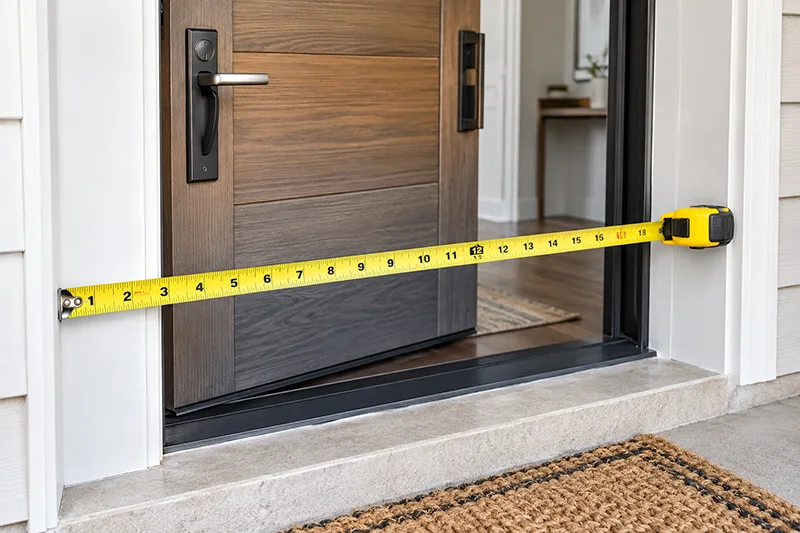
Before choosing between single and double entry doors, consider the dimensions of your existing opening.
A standard entryway may not have enough width for two full door panels without significant structural modifications.
Single doors generally work better when space is limited. Double doors typically require a larger rough opening and enough surrounding wall space to accommodate the complete door system.
If you currently have a single door but want a wider appearance, adding sidelites may provide a similar visual effect without requiring two operating door panels.
“Professional measurements can help determine which configurations will work with your existing entryway.”
Homeowners often assume double doors are the only way to create a wide, impressive entrance. A single entry door with sidelites can provide another excellent option. Sidelites are narrow glass panels installed beside the door.
Both configurations can incorporate glass. Single entry doors can include full-lite, three-quarter-lite, half-lite, Craftsman-style, decorative, privacy, or clear glass. Additional light can come from sidelites and transoms. Double entry doors provide even more potential glass surface because glass inserts can be installed in both door panels. A double full-lite entry system can bring significant natural light into a foyer while creating a strong indoor-outdoor connection.

Glass installed directly within the entry door.

Vertical glass panels installed beside the door.

Horizontal glass installed above the entry system.

Energy efficiency is another important consideration when comparing single and double entry doors. A single entry door has fewer seams and potential air-infiltration points than a double-door system. Because of this, single doors can sometimes provide a slight advantage in thermal performance.
However, modern double entry doors can still provide excellent energy efficiency when they include quality weatherstripping, insulated construction, efficient glass packages, and professional installation. Performance depends heavily on the door material, glass package, frame system, weathersealing, and quality of installation.

Helps reduce heat transfer through the door.

Low-E and insulated glass options can help improve thermal performance.

Helps reduce drafts around the door system.

Proper installation helps the entire entry system perform as intended.
Both single and double entry doors can provide excellent security when equipped with strong materials and properly installed locking systems.
Single doors have a relatively simple locking configuration because the operating panel locks directly into the frame.
Double doors generally require additional hardware to secure the secondary panel. High-quality double-door systems can include reinforced locking points and secure astragals to help stabilize the inactive door.
Regardless of configuration, homeowners should consider quality locks, strong frames, durable door materials, and professional installation.
One of the biggest functional advantages of double entry doors is the ability to create a much wider opening.
Opening both panels can make it considerably easier to move:
A single entry door may be perfectly adequate for everyday use, but homeowners who regularly move large items may appreciate the additional clearance provided by double doors.
For most homeowners, one door panel is all that is needed for everyday entry and exit. This gives single entry doors an advantage in simplicity.
Double doors typically have one primary active panel that functions like a regular front door. The second panel usually remains secured until additional opening width is needed. For that reason, double doors do not necessarily feel significantly different during normal daily use.

A single entry door offers simple, convenient everyday operation with one primary door panel that is easy to open, close, lock, and maintain.
It’s a practical choice for homeowners who want reliable access without the added hardware or operation of a double-door system.

Double entry doors provide flexible wider access by allowing the secondary door panel to open when extra space is needed.
This wider opening can make it easier to move furniture, appliances, and other large items while still functioning like a standard entry door for everyday use.

Maintenance depends more on door material and finish than whether the entry system has one or two panels.
However, double doors contain more components, which may mean additional:
Single doors generally have fewer components to inspect and maintain.
Choosing fiberglass or steel entry doors can further reduce maintenance compared with some traditional wood door systems.

Low-maintenance and available in realistic wood-grain finishes.

Strong, durable, and relatively easy to maintain.
Single entry doors generally cost less than comparable double-door systems because they require fewer materials, less hardware, and a smaller frame assembly.
Double entry doors usually cost more because they include:
Decorative glass, sidelites, transoms, premium hardware, custom finishes, and non-standard sizes can also affect project pricing.
Rather than focusing only on the initial price, consider how each option fits your home, everyday needs, long-term plans, and architectural style.

Generally the more budget-friendly configuration.

Generally require a larger investment but provide additional width and visual impact.

Single entry doors work with nearly every architectural style.
Double entry doors are especially effective on homes with larger facades or symmetrical architectural layouts.
Both configurations can be highly customized. Depending on the manufacturer and door system, homeowners may be able to choose from a wide range of design options.

Choose from painted colors, stained finishes, and wood-grain appearances.

Add distinctive patterns and architectural detail.

Allow natural light while helping limit visibility through the door.

Create a bright, open entrance and improve exterior views.

Coordinate handlesets, hinges, and accessories with the rest of the home.

Add visual detail to glass areas.
There is no universal answer. The right entry door depends on your home.

You have a standard-size entrance, prefer straightforward operation, want to control project costs, or simply like the appearance of a single-door design.

You have a wider entrance, want to create a more dramatic architectural statement, regularly move large objects through the front entrance, or want the symmetry associated with two matching doors.
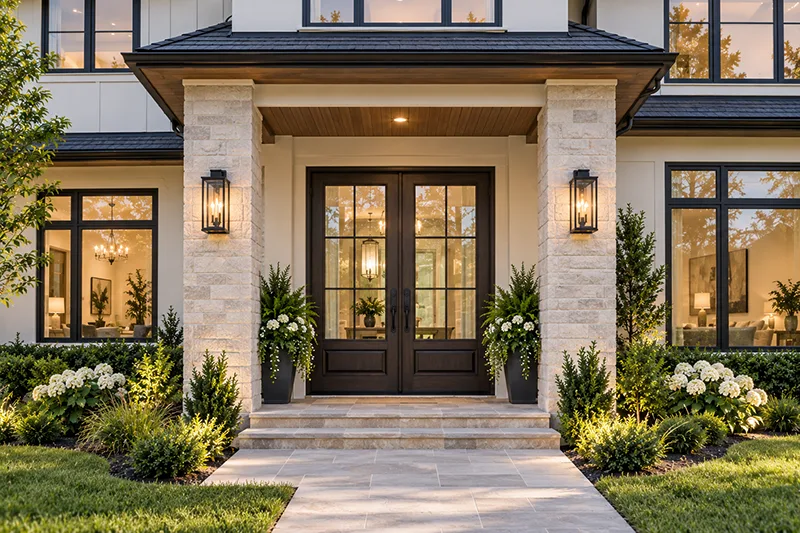
The decision does not have to be limited to one door versus two doors. Sidelites and transoms can completely change the appearance of an entry system.
Possible configurations include:
Even a high-quality entry door may not perform properly if it is incorrectly installed. Professional installation helps ensure that the door is properly aligned, sealed, secured, and adjusted for smooth operation.
An experienced installer can also evaluate the existing opening and help determine whether a single door, double door, sidelites, transom, or another configuration makes the most sense for the home.
Neither option is automatically better. Single doors work well for most homes and generally require less space, while double doors provide a wider opening and a more dramatic appearance. The best choice depends on your entryway, home style, budget, and functional needs.
Double entry doors generally cost more than comparable single-door systems because they require two door panels, additional hardware, a larger frame, and potentially more installation work.
Single doors can have a slight advantage because there are fewer seams and potential air-infiltration points. However, properly installed double doors with quality weatherstripping and insulated construction can also provide excellent energy efficiency.
Yes. One of the biggest advantages of double entry doors is the ability to open both panels and create a much wider opening for furniture, appliances, and other large items.
Possibly, but the existing opening must be wide enough or modified to accommodate the larger door system. A professional evaluation can determine whether structural changes would be required.
Yes. A single door with one or two sidelites can create a wider-looking entrance and introduce additional natural light without requiring two operating door panels. We provide sidelites and transoms from Provia.
Quality double entry doors can be very secure when equipped with strong locks, reinforced hardware, secure secondary-door locking systems, durable frames, and professional installation.
In many systems, yes. One panel typically serves as the primary operating door while the second panel can be unlocked and opened when additional width is needed.
Yes. Both configurations can include decorative glass, privacy glass, clear glass, internal blinds, grille patterns, and other glass options depending on the door manufacturer and model.
Single entry doors are usually the more practical choice for smaller homes because they require less wall and entryway space. Adding a sidelite or transom can make the entrance appear larger without installing two doors.
They can. Double entry doors create a strong symmetrical focal point and can complement larger traditional, transitional, Mediterranean, Spanish-inspired, and contemporary homes particularly well.
Consider the width of your existing entryway, your home’s architectural style, how much opening space you need, your budget, energy-efficiency priorities, desired amount of natural light, and the appearance you want to create. Professional measurements and design guidance can help determine which configuration works best.