
Energy-Efficient Windows for Denver Homes: What Should You Look For?
Read the ratings. Choose glass that fits Denver.
How to choose energy-efficient windows for Denver: glass, ratings, altitude, Colorado’s 2026 rule and why installation matters.
Explore Denver Replacement Windows
Start With the Ratings on the Label
Denver windows have a hard job. They face cold winters, strong sun and an elevation of about 5,280 feet that affects how sealed glass units behave. A window that looks efficient on a showroom floor still has to handle all three.
This guide explains what makes a window energy efficient, how to read the ratings, what Colorado’s 2026 standard means and what to ask before you buy. If you are not sure your windows are due yet, start with the signs you need replacement windows.
What Makes a Window Energy Efficient?
No single feature does the job. The U.S. Department of Energy lists the main choices when replacing windows as the frame type, the glazing type, gas fills and spacers, and the operation type. In practice, efficiency comes from several parts working together:
- Glass layers that slow heat flow
- Low-emissivity (low-e) coatings that reduce heat loss and gain
- Gas fills between the panes
- A well-built frame and spacer
- A tight installation, since an efficient window in a leaky opening still leaks
How to Read Window Energy Ratings
The Department of Energy points to the ENERGY STAR label and the National Fenestration Rating Council (NFRC) label as the ways to compare windows. Two ratings do most of the work:
- U-factor is the rate at which a window conducts non-solar heat flow. A lower number means better insulation, which matters most in colder climates. ENERGY STAR guidance describes typical U-factors from about 0.20 to 1.20.
- Solar heat gain coefficient (SHGC) measures how much solar radiation passes through the window, on a scale of 0 to 1. A lower number means less solar heat gets in.
The Department of Energy recommends comparing whole-window ratings, not center-of-glass numbers, because whole-window ratings better reflect the full product. ENERGY STAR labels also show the climate zones where a window will perform best, so check that the zone fits Colorado.
What Matters Most in Energy-Efficient Windows for Denver
For cold climates, the Department of Energy recommends gas-filled windows with low-e coatings and a low U-factor. For climates with both hot and cold seasons, it suggests looking for both a low U-factor and a low SHGC. Denver has cold winters and strong sun, so both ratings matter. U-factor measures how well a window insulates, and a lower number means less heat escapes. SHGC, the solar heat gain coefficient, measures how much of the sun’s heat passes through the glass on a scale of 0 to 1, and a lower number means less solar heat gets in.
ENERGY STAR’s consumer guidance also adjusts by which way the window faces. In its cold-climate column:
| Window faces | What the guidance suggests |
|---|---|
| North | The lowest U-factor you can afford |
| South | The highest SHGC, with the lowest U-factor you can afford |
| East or west | A low SHGC, or shade |
Talk through your exposures with your installer, since trees, neighboring buildings and overhangs change what each window sees.
What Colorado’s 2026 Window Standard Means
Colorado’s energy standard requires residential windows sold or leased for use in Colorado on or after January 1, 2026 to have a U-factor of 0.30 or lower. The rule applies to products being sold, not to windows already in your home, and it does not change local building codes. It sets a floor, not a goal: a window can meet it and still be a poor match for your exposure. Ask your installer to confirm the rated U-factor and SHGC of the specific window you are choosing.
Why Denver’s Elevation Matters for Glass
Insulated glass units trap gas between the panes behind an airtight seal. GreenBuildingAdvisor reports that these units perform well near the altitude of the factory where they were assembled, and that units made at sea level and installed above 5,000 or 6,000 feet can have problems. Those include panes that bow out, seals that leak and a U-factor that no longer matches the manufacturer’s claim.
Denver sits at about 5,280 feet. Ask the manufacturer how its glass units are built and tested for Denver’s elevation, and where they were assembled. A clear answer is a good sign.
Panes, Frames and Glass Options
One of the biggest choices is the number of panes. We compare double-pane and triple-pane windows in a separate guide. You can also browse our full range of replacement windows, including clear, privacy and decorative glass. For a side-by-side look, see double-pane vs. triple-pane windows in Denver.
Installation Is Part of Efficiency
The Department of Energy says windows should be installed by trained professionals following the manufacturer’s instructions, with flashing and air sealing done as the manufacturer recommends. ENERGY STAR notes that poor installation can cause drafts and condensation even with efficient windows. For what to expect on the day, see the window installation process. Here is what to expect on installation day.
Questions to Ask Before You Buy
- What are the NFRC-rated U-factor and SHGC of this exact window?
- Is it ENERGY STAR certified, and for which climate zones?
- Does it meet Colorado’s 0.30 U-factor requirement?
- How are the glass units built and tested for Denver’s elevation?
- What glass package and gas fill does it use?
- Who installs it, and how is the opening sealed?
Use the same questions to compare window replacement quotes.
Frequently Asked Questions
What makes a window energy efficient?
A combination of glass layers, low-e coatings, gas fills, a well-built frame and spacer, and a tight installation. No single feature is enough. Compare the whole-window U-factor and SHGC on the NFRC label, and ask how the window will be installed.
What U-factor should I look for?
Lower is better, because less heat passes through. Colorado requires residential windows sold or leased on or after January 1, 2026 to be 0.30 or lower. For a cold climate, the Department of Energy suggests the lowest U-factor you can afford, so compare options below that line.
Do I need low-e glass and gas fill in Denver?
For cold climates, the Department of Energy recommends gas-filled windows with low-e coatings and a low U-factor. Ask which coating and gas the window uses and how the glass unit is built for Denver’s elevation.
Does elevation really affect windows?
It can. Sealed glass units made at low elevation and installed at high elevation can have problems, such as bowed panes or leaking seals, according to GreenBuildingAdvisor. Ask the manufacturer how its units are built and tested for Denver.
Is ENERGY STAR the same as the Colorado rule?
No. They are separate. ENERGY STAR is a voluntary label with criteria by climate zone. The Colorado rule is a requirement for residential windows sold or leased in the state. Ask for both the label and the rated U-factor.
How much will new windows save on my bills?
That depends on your home and on the windows you have now. The Department of Energy says heat gain and loss through windows account for 25% to 30% of residential heating and cooling energy use, but it does not promise a savings figure. Ask for the ratings, not a savings claim.
What is solar heat gain coefficient, and when does it matter?
Solar heat gain coefficient describes how much solar heat passes through the window. Compare it alongside U-factor, with the room’s orientation, shade, and comfort needs in mind.
Should every room in my home get the same glass package?
You can compare options by room. A sunny room and a shaded room may have different needs for glare, daylight, and heat gain.
How do I verify the rating on the window in my quote?
Ask for the whole-window rating for the exact model, operating style, and glass package. Compare it with the product label or rating documentation before ordering.
How does the frame affect window efficiency?
The frame and sash affect heat transfer and sealing. Compare whole-window ratings, then consider maintenance, appearance, and fit when choosing frame materials.
Will a more efficient window eliminate indoor condensation?
A warmer interior glass surface can help in some conditions, but indoor humidity and ventilation also matter. Ask for persistent moisture to be diagnosed.
Is installation as important as the glass package?
Both matter. A rated unit performs as an assembly, and gaps around the frame can still allow drafts. Ask how the installer will seal and flash the opening.
Related Articles
Keep planning with these door and window guides.
Choosing a Window Replacement Company in Denver
Compare installers, written estimates, and warranty terms.
Read the Company GuideWindow Replacement Cost in Denver
Understand the details that affect your window project budget.
Explore Window Costs
Drafty Doors and Windows: When to Replace
Explore common comfort problems and replacement signs.
Read the Comfort Guide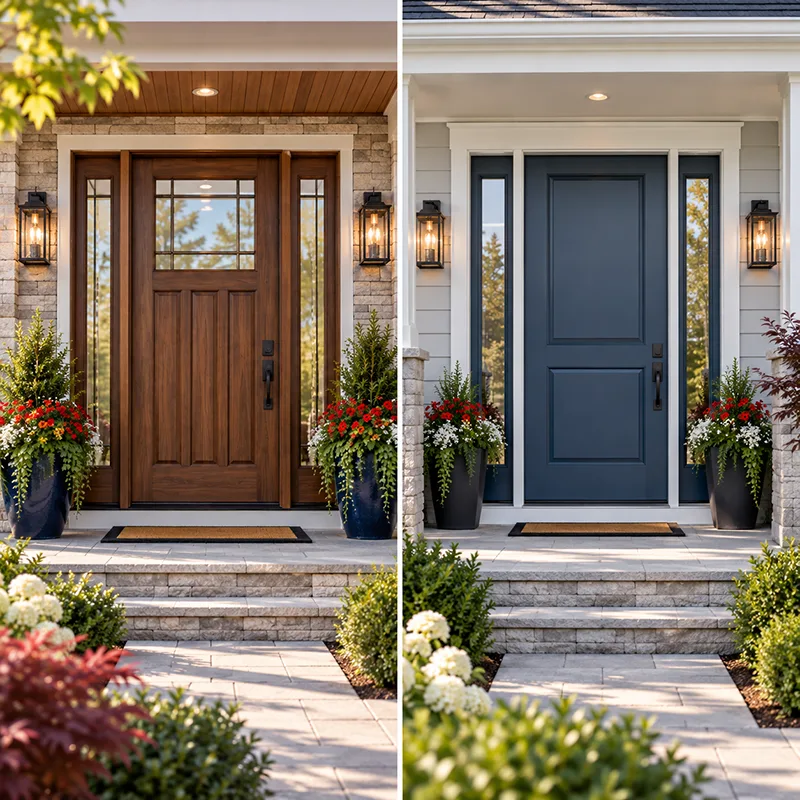
Fiberglass vs. Steel Entry Doors
Compare appearance, maintenance, and material options.
Compare Door MaterialsReady to Plan Your Denver Project?
Talk through product options, installation and pricing with our Denver team.
Denver Door & Window Replacement · Denver Entry Door Replacement · Denver Window Replacement · Denver Homeowner Guides
Request a Free EstimateCall (303) 653-9560