
Choosing a new entry door is about more than finding a style that looks good from the street. Your front door can affect your home’s energy efficiency, security, maintenance requirements, durability, and overall curb appeal.
Two of the most popular exterior door materials are fiberglass and steel. Both can be excellent choices, but they offer different advantages depending on your home, climate, design preferences, and priorities.
In this guide, Durable Doors & Windows compares fiberglass vs. steel entry doors so you can better understand the differences and decide which option may be right for your home.
Choosing a new entry door is about more than finding a style that looks good from the street. Your front door can affect your home’s energy efficiency, security, maintenance requirements, durability, and overall curb appeal.
Two of the most popular exterior door materials are fiberglass and steel. Both can be excellent choices, but they offer different advantages depending on your home, climate, design preferences, and priorities.
In this guide, Durable Doors & Windows compares fiberglass vs. steel entry doors so you can better understand the differences and decide which option may be right for your home.
Both Provia fiberglass and steel entry doors are designed to provide durability, energy efficiency, and protection from the elements. However, they differ in appearance, maintenance, resistance to damage, and long-term performance.
Fiberglass doors are popular because they combine durability with extensive design flexibility. Many fiberglass doors can closely replicate the appearance of natural wood without requiring the maintenance associated with a traditional wood entry door.
Fiberglass may be a great choice if you want:
Steel doors are known for their strength, security, and value. They are available in many attractive designs and can provide excellent protection while maintaining a clean, traditional, or contemporary appearance.
Steel may be a great choice if you want:
A fiberglass entry door typically consists of a durable fiberglass exterior surrounding an insulated core. The exterior surface can be manufactured with either a smooth finish or a textured wood-grain appearance. Modern fiberglass doors are available in styles ranging from classic and Craftsman-inspired designs to contemporary full-glass entry systems.

Fiberglass does not require the same level of upkeep as natural wood. It will not rot like untreated wood and generally performs well when exposed to moisture and changing weather conditions.

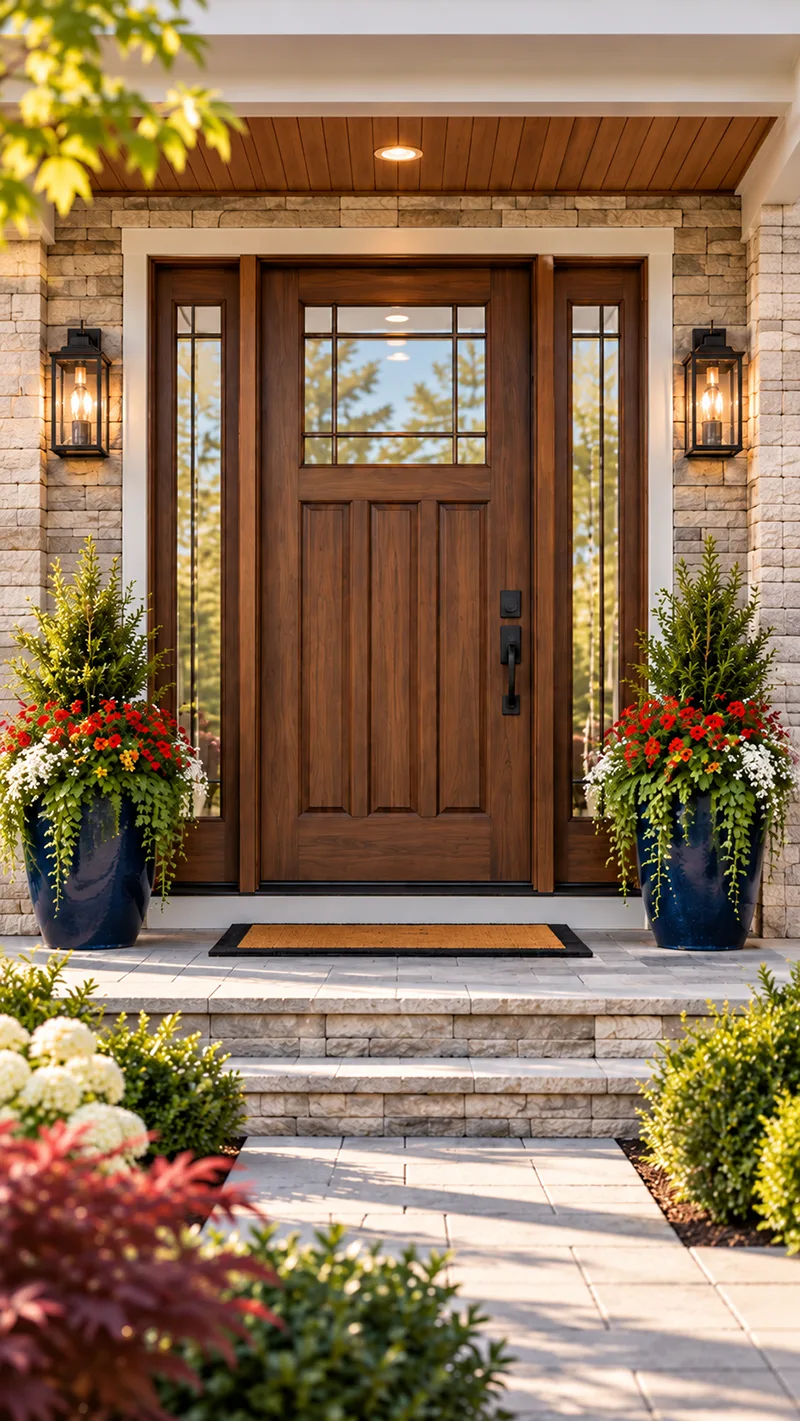
One of fiberglass's biggest advantages is its ability to replicate natural wood. Wood-grain textures and stained finishes can provide the warmth of a traditional wood door while offering the durability of fiberglass.

Fiberglass is resistant to moisture and can perform well in areas that experience heat, humidity, rain, snow, or significant seasonal temperature changes.

Many fiberglass doors feature insulated cores and energy-efficient glass packages designed to help reduce heat transfer through the entryway.

Homeowners can choose from numerous panel designs, glass configurations, finishes, sidelites, transoms, and hardware combinations.

Fiberglass entry doors are built for lasting performance, resisting moisture, warping, rust and everyday wear while maintaining their appearance and dependable operation overtime.

A steel entry door typically uses steel exterior skins surrounding an insulated interior core. Steel doors are engineered to provide strength while still offering attractive residential designs. Today’s steel doors are available in far more styles than the plain metal doors many homeowners may remember.

Steel provides a strong exterior surface and can be an excellent choice for homeowners who place a high priority on durability and security.

When combined with quality frames, locks, deadbolts, and professional installation, steel entry doors can provide a strong and secure entrance to the home.

Steel doors can offer an attractive balance between performance, durability, security, and cost.

Many modern steel entry doors contain insulated cores designed to help reduce heat transfer and improve comfort around the entryway.

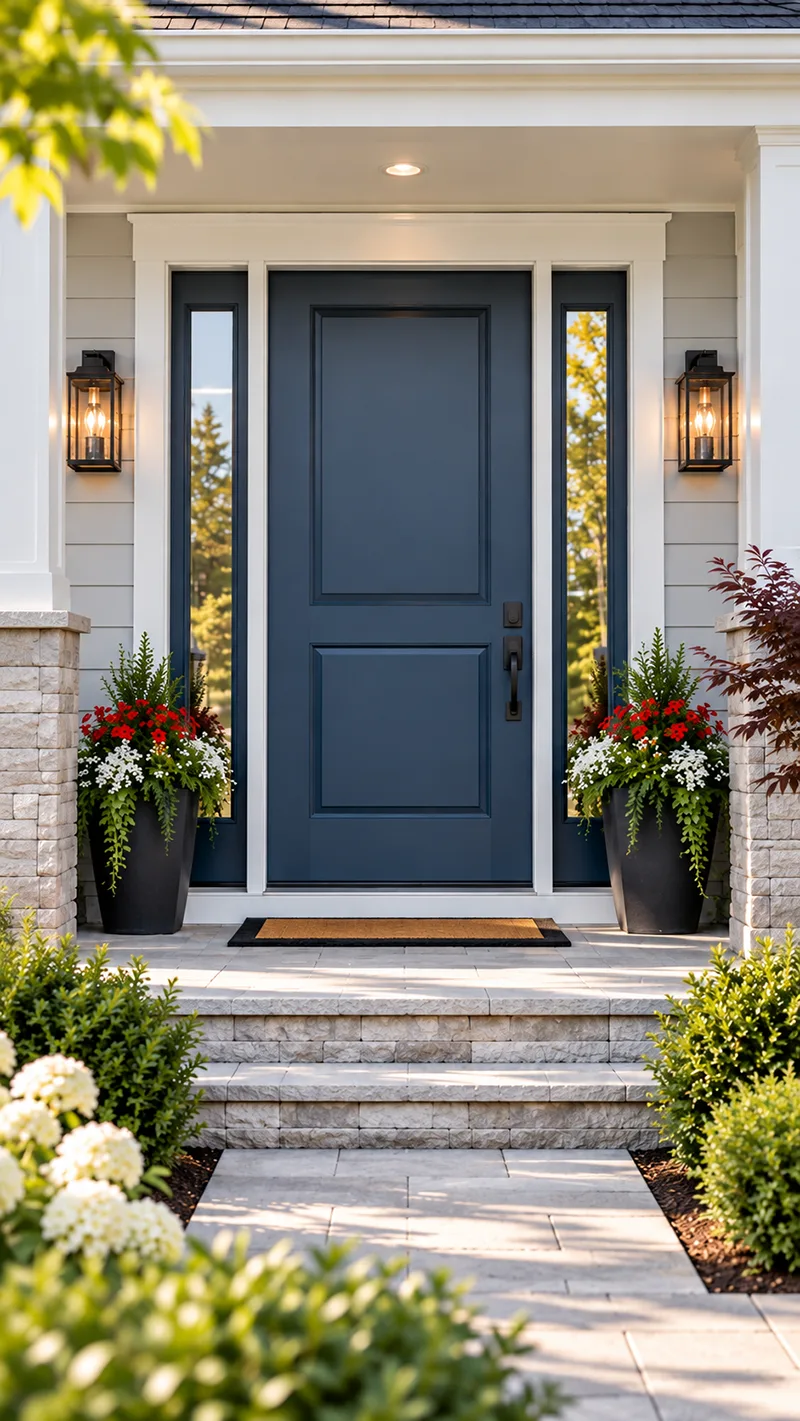
Steel doors work particularly well with smooth painted finishes and can complement traditional, transitional, and contemporary architecture.

Steel entry doors feature strong, durable construction design to provide dependable security and long-lasting everyday performance.
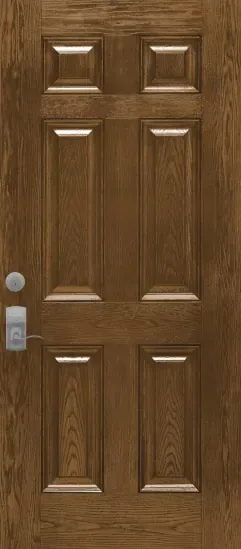
For many homeowners, appearance is one of the biggest factors when selecting a new front door.

If you like the character of a stained wood entry door, fiberglass is often the stronger option.
Fiberglass doors can be manufactured with detailed wood-grain textures designed to resemble species such as oak, mahogany, cherry, or fir.
Homeowners can also choose smooth fiberglass when they prefer a painted finish.
**Winner for wood appearance:** Fiberglass
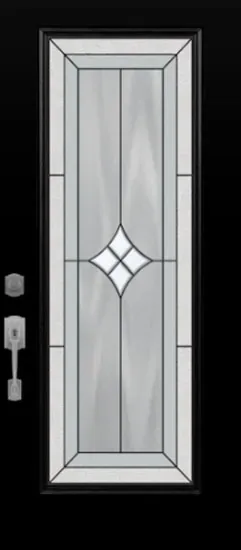
Steel entry doors are typically best suited for painted finishes.
They can be designed with traditional raised panels, contemporary lines, decorative glass, clear glass, sidelites, transoms, and other architectural details.
**Winner for smooth painted simplicity:** Steel or Fiberglass
A properly installed entry door can help reduce drafts and improve comfort around one of the largest openings in your home’s exterior. Both fiberglass and steel doors are available with insulated cores and energy-efficient glass options.
Fiberglass naturally performs well as part of an insulated door system and is less conductive than metal.
Depending on the specific door configuration, homeowners may be able to choose features such as:
Modern steel entry doors can also provide excellent energy efficiency because insulation is installed between the exterior steel surfaces.
The overall efficiency of either material depends on the complete door system, including the frame, glass, weatherstripping, threshold, and quality of installation.
There is no universal winner.
A high-quality steel door can outperform a lower-quality fiberglass door, and the reverse can also be true. Instead of choosing based only on material, compare the specifications of the complete door system.
Both materials can provide a secure entryway when combined with a properly installed frame and quality locking hardware.

Steel has an obvious advantage in exterior surface strength and is often selected by homeowners who prioritize security. However, the door itself is only one part of the system.

Fiberglass entry doors can also provide excellent security, particularly when they include reinforced construction and are installed with quality frames and locking hardware.

Security depends on several components working together:
**Advantage for maximum exterior strength:** Steel
Your exterior door must withstand sun, rain, temperature changes, wind, and moisture year after year.

Fiberglass is resistant to moisture-related damage and does not rust. This makes it particularly attractive in humid, rainy, or coastal environments.

Steel doors are manufactured with protective finishes, but scratches or chips that expose bare metal should be addressed to help prevent corrosion. Routine inspection can help keep a steel door looking and performing its best.

**Advantage for moisture resistance:** Fiberglass
Neither material requires the extensive maintenance commonly associated with traditional wood doors.

Typical maintenance may include:

Typical Maintenance may include:
Steel doors require many of the same basic maintenance tasks, but homeowners should also inspect the surface for scratches, dents, or chips in the finish.
Any exposed steel should be properly repaired and protected.
**Advantage for moisture resistance:** Fiberglass
Both fiberglass and steel doors can provide many years of dependable performance. The better choice depends partly on the types of wear your entry door is most likely to experience.

Fiberglass is particularly resistant to:
Steel provides excellent strength but can be more susceptible to:
**Advantage for impact strength:** Steel
**Advantage for moisture and corrosion resistance:** Fiberglass
Door pricing varies significantly based on manufacturer, size, glass, finish, hardware, sidelites, transoms, installation requirements, and other customization.

Fiberglass often offers a wide pricing range.
Basic fiberglass doors can be affordable, while premium wood-grain fiberglass systems with decorative glass, sidelites, and custom finishes can become considerably more expensive.

Steel is frequently an excellent value for homeowners looking for durability, security, and energy efficiency without needing an elaborate wood-look finish.
Instead of comparing material alone, compare complete installed door systems with similar specifications.
Door pricing varies significantly based on manufacturer, size, glass, finish, hardware, sidelites, transoms, installation requirements, and other customization.

Choose Fiberglass If You Want:

Choose Steel If You Want:

Homes in warmer climates can benefit from both fiberglass and steel doors when the door system includes appropriate insulation, weatherstripping, and energy-efficient glass.

Fiberglass is often an excellent choice because it handles temperature changes and direct exposure well while requiring relatively little maintenance.

Steel doors can also perform very well when properly insulated and finished. If the entryway receives intense direct sunlight, consider the door color, glass package, orientation of the home, and manufacturer recommendations when selecting the system.

Both materials can work well in colder regions. Choosing the right entry door for a cold climate can help improve indoor comfort, reduce drafts, and support better energy efficiency during winter. Both fiberglass and steel doors can perform well in cold conditions, but each offers different advantages in insulation, durability, maintenance, and weather resistance.
Look beyond the exterior skin and consider:
Energy-Efficient Comfort With Excellent Moisture Resistance
Strong, Secure Performance for Harsh Winter Conditions
Best Choice: Both can perform very well in cold climates. Fiberglass may have an advantage for moisture resistance and low maintenance, while steel is an excellent choice for homeowners prioritizing strength, security, and value.
Your home’s architecture may influence which material and finish feels most natural.
The door material is only part of the design decision. Glass can dramatically change the appearance, privacy, natural light, and energy performance of the entryway.
Popular choices include:

Ideal for homeowners who want maximum natural light and open views.

Allows light into the home while limiting direct visibility through the entry door.

Adds architectural character, texture, and visual interest.

Blinds enclosed between glass panes can provide adjustable privacy without exposed cords or traditional window coverings.

Artistic glass designs can transform the front entry into a distinctive architectural feature.
A replacement entry door can also be configured with additional glass surrounding the door.
Vertical glass panels installed beside the entry door can help bring additional light into the foyer.
Horizontal glass panels installed above the entry door can help bring additional natural light into the foyer while making the entrance feel taller, brighter, and more dramatic.
Even a premium entry door cannot perform as intended if it is improperly installed.
Professional installation helps ensure the entire door system is properly positioned, sealed, secured, and adjusted.
Important installation details include:
A correctly installed entry door should open and close smoothly while helping protect the home from drafts, moisture, and outdoor conditions.
There is no single entry door material that is best for every homeowner.
**Fiberglass may be the better option** if you prioritize wood-like appearance, low maintenance, moisture resistance, and extensive design flexibility.
**Steel may be the better option** if you prioritize strength, security, value, and a smooth painted appearance.
For many homeowners, the best decision comes down to comparing specific door models rather than choosing solely by material.
Consider your home’s architecture, climate, entrance location, glass preferences, maintenance expectations, security needs, and budget before making your final decision.
Neither material is automatically better for every home. Fiberglass doors are often preferred for low maintenance, moisture resistance, and wood-look designs, while steel doors are popular for strength, security, and overall value.
Both fiberglass and steel entry doors can provide excellent energy efficiency when they include insulated cores, quality weatherstripping, and energy-efficient glass. Overall performance depends on the complete door system and installation.
Steel doors offer excellent exterior strength and can be a strong choice for homeowners focused on security. Fiberglass doors can also provide excellent security when paired with quality frames, deadbolts, hardware, and professional installation.
Fiberglass typically requires less maintenance because it does not rust and resists moisture-related damage. Steel doors are also relatively low maintenance but should be inspected for scratches, chips, or exposed metal.
Steel doors are designed with protective finishes, but exposed metal can potentially develop corrosion if scratches or chips are left untreated. Touching up damaged finishes can help protect the door.
Many fiberglass entry doors feature detailed wood-grain textures and stained finishes designed to resemble natural wood. They can provide a traditional wood appearance without the same maintenance requirements as real wood.
Both materials can perform well in hot climates. Fiberglass is often attractive because of its weather resistance and low maintenance, while properly insulated steel doors can also provide excellent performance.
Fiberglass and steel doors can both work well in cold climates when properly insulated and installed. Fiberglass offers excellent moisture resistance, while steel provides strength and security along with insulated-core options.
Both materials are durable in different ways. Fiberglass resists moisture, rot, rust, and many forms of everyday wear, while steel offers exceptional strength but may be more susceptible to dents or surface corrosion if damaged.
Pricing varies based on the manufacturer, size, finish, glass, hardware, sidelites, transoms, and installation requirements. Steel often provides strong overall value, while premium fiberglass doors with wood-grain finishes and custom options may cost more.
Yes. Both fiberglass and steel entry doors can be configured with clear glass, privacy glass, decorative glass, art glass, internal blinds, sidelites, and transoms depending on the door manufacturer and model.
Consider your home’s style, climate, maintenance preferences, security needs, desired appearance, glass options, and budget. A professional door specialist can help you compare specific fiberglass and steel door systems to determine which option fits your home best.
Durable Doors & Windows can help you compare fiberglass and steel entry door options based on your home’s style, existing entryway, design preferences, and performance goals.
Explore available colors, finishes, glass styles, sidelites, transoms, hardware, and energy-efficient options to create an entry door that complements your home.
Ready to replace your front door?
Contact Durable Doors & Windows to explore fiberglass
and steel entry door options and request your free estimate.