7 Things to Consider Before Replacing Your Front Door
Plan your Phoenix entry door project with practical questions and options.
Read the Planning GuideHot rooms, drafts, fog between panes, and difficult operation can be signs that your windows need attention. Phoenix heat and strong sunshine make comfort and glass performance especially important.

Use these nine warning signs to decide when to have your windows evaluated and whether maintenance, repair, or replacement makes sense for your home.
YOUR PHOENIX DOOR & WINDOW OFFER
+ an Additional $250 Off Your Entire Project
Offer ends November 30, 2026. Ask your local team about qualifying products, eligibility, and applicable terms.
Service and personal attention.
Guidance through your project.
A team focused on your home.
Careful measurements and fitting.
Compare complete-product ratings.
Read feedback from customers.
Arizona Registrar of Contractors · ROC #367193
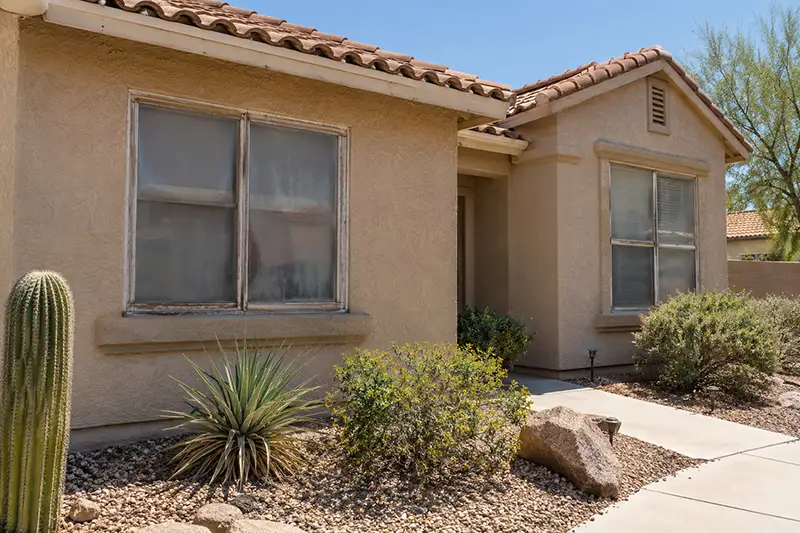
Phoenix homeowners rely heavily on their windows to help separate comfortable indoor spaces from intense Arizona heat, strong sunshine, dust, and changing seasonal conditions. As windows age, worn seals, damaged frames, outdated glass, and poor operation can begin affecting both the appearance and comfort of your home.
Some window problems are easy to notice. Others develop gradually and may not become obvious until rooms feel warmer, windows become difficult to operate, or condensation begins appearing between the panes.
If you are wondering whether your windows are simply showing their age or are ready for replacement, here are nine common signs to watch for in your Phoenix home.
Windows in the Phoenix area can experience long periods of intense sunlight, high outdoor temperatures, dry conditions, airborne dust, and large differences between indoor and outdoor temperatures. Older windows were also often manufactured before many of today’s energy-efficient glass window technologies became common. As the window system ages, seals, weatherstripping, frames, glass units, balances, locks, and other components can gradually lose performance.
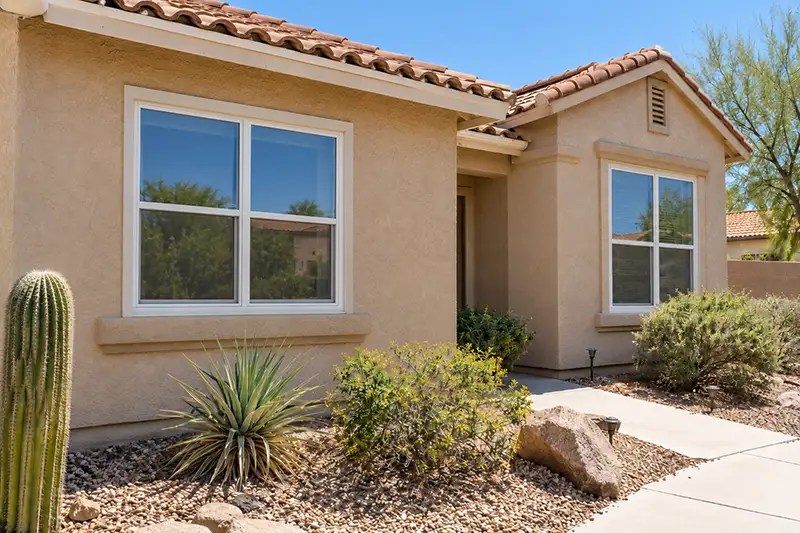
Replacing aging windows gives homeowners an opportunity to address those problems while considering updated glass packages, improved sealing, easier operation, and a style that better complements the home.

Phoenix windows separate conditioned indoor spaces from extremely hot outdoor temperatures during much of the year.

Direct Arizona sunshine can increase solar heat entering through older or poorly performing glass.

Weatherstripping, seals, balances, locks, and insulated glass units can deteriorate over time.

Modern replacement windows can provide improved sealing and glass options designed around your home's needs.
You don’t necessarily need to wait until a window completely fails before considering replacement. Several smaller problems occurring together can indicate that an older window system is nearing the end of its useful service life.
Walk near an older window on a sunny Phoenix afternoon and you may notice that the area feels considerably warmer than the rest of the room.
Some heat near a sun-exposed window is normal, but excessive heat can be an indication that your existing glass does not provide the solar-control performance available in newer window systems.
Modern replacement windows can be configured with insulating glass and Low-E coatings designed to help control heat transfer and solar heat gain.
For hot, sunny climates, solar heat gain is an especially important consideration when comparing replacement windows.
A closed window should create a consistent seal around its sash and frame.
If you can feel outside air entering around the window, the problem may involve deteriorated weatherstripping, damaged seals, frame movement, poor fitting, or an aging window assembly.
Air leakage can make it more difficult to maintain consistent temperatures inside your home and may cause rooms near affected windows to feel less comfortable.
A properly fitted replacement window is designed to create a tighter connection between the window system and the opening.
Condensation on the interior or exterior surface of glass can occur under certain weather conditions.
Moisture trapped between panes of an insulated glass unit is different.
Fog, haze, or condensation that appears inside the sealed glass unit can indicate that its seal has failed. Once this happens, the window may remain cloudy and the insulating glass assembly may no longer perform as originally intended.
If multiple older windows are developing failed seals, it may be time to evaluate complete window replacement instead of addressing each window separately.
Windows should operate smoothly without excessive force.
Older windows can become difficult to use because of:
A casement window that repeatedly sticks, slams shut, refuses to stay open, or will not lock correctly should be evaluated.
Replacement windows can restore smooth everyday operation while giving you the opportunity to select a window style that better fits how you use the room.
Phoenix sunshine and years of outdoor exposure can take a toll on aging window frames and exterior finishes.
Look closely for:
Some cosmetic issues can be maintained or repaired. More extensive frame deterioration may indicate that replacement is the better long-term solution.
New replacement windows can refresh the exterior appearance of the home while providing an updated window system beneath the new finish.
Window locks should engage easily and hold the sash firmly in place.
A lock that no longer aligns properly may be caused by worn hardware, sash movement, frame distortion, or deterioration within the window.
Do not ignore windows that cannot be securely closed and locked.
Modern replacement windows can incorporate updated locks and hardware while restoring proper operation and alignment.
East- and west-facing windows can receive significant direct sunlight, and west-facing rooms can be particularly uncomfortable during late Phoenix afternoons.
Modern window glass gives homeowners more control over solar heat gain, visible light, and glare than many older window systems.
Depending on the window and room, options may include:
ENERGY STAR recommends considering Solar Heat Gain Coefficient, or SHGC, when selecting windows. Lower SHGC values indicate that less solar heat passes through the window, an important consideration in hot climates.
Window replacement does not always begin with a mechanical failure.
Older windows may simply no longer fit the appearance you want for your home.
Replacing them can provide opportunities to update:
The right window style can complement Phoenix-area homes ranging from Ranch and Southwestern designs to contemporary, transitional, Mediterranean, and traditional architecture.
One minor issue does not automatically mean a window needs replacement.
The situation changes when multiple problems begin appearing together.
For example, you may have windows that:
When several of these conditions exist throughout the home, a replacement-window evaluation can help you determine whether repairing individual components still makes sense or whether replacing the complete window system would provide a better long-term solution.
Replacing worn or outdated windows can change much more than the glass itself.
A professionally installed replacement window can provide cleaner sightlines, updated exterior styling, smoother operation, improved sealing, and access to modern energy-efficient glass packages.
For Phoenix homeowners, it also provides an opportunity to choose window performance characteristics specifically suited to a hot, sunny climate.


Finding the right window involves more than choosing a frame color or window style.
Performance characteristics can be particularly important in Arizona because of the region’s strong sunshine and cooling demands.

Consider insulating glass systems and Low-E coatings designed to help manage heat transfer and solar energy.

Solar Heat Gain Coefficient measures how much solar heat passes through a window. Lower SHGC values allow less solar heat through the glass, making this an important specification to compare when choosing windows for hot and sunny locations.

Frame construction contributes to overall window durability, appearance, and thermal performance. Materials and product lines should be evaluated based on your home's exposure, design, and performance requirements.

Even high-quality glass will not perform as intended if the window is poorly fitted or improperly sealed. Proper measurement and installation are essential parts of a replacement-window project.

Different rooms may benefit from different operating styles. Common options include: - Double-hung - Sliding - Casement - Awning - Picture - Bay and bow - Architectural windows

Correct installation helps the new window operate, seal, drain, and perform as intended. Installation should include proper fitting, leveling, fastening, sealing, finishing, and a final operational inspection.
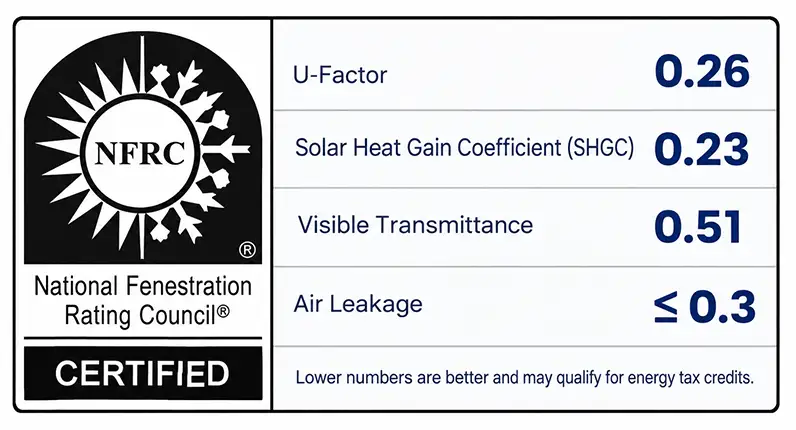
You may see several ratings when comparing energy-efficient replacement windows.
Two of the most useful are U-Factor and Solar Heat Gain Coefficient (SHGC).
U-Factor measures how well a complete window resists heat transfer.
Lower U-Factor values indicate greater insulating performance.
SHGC measures how much solar heat passes through the window.
The rating ranges from 0 to 1, with lower values indicating less solar heat gain.
Because Phoenix is a hot and sunny market, SHGC deserves particular attention when comparing glass packages.
The National Fenestration Rating Council provides standardized ratings that allow homeowners to compare window performance.
An NFRC label can include:
Ask about the exact performance ratings of the window configuration you are considering rather than relying only on general terms such as “energy efficient.”
Once you decide that replacement makes sense, the next step is determining which window styles work best for your rooms and architecture.
Window replacement is also an opportunity to reconsider how much light, privacy, decoration, and solar control you want in different rooms.
There is no universal answer.
Replacing a single window can make sense when one opening has suffered isolated damage or has a specific functional problem.
A larger replacement project may make more sense when windows throughout the home are similar in age and are experiencing the same types of problems.
A professional evaluation can help determine which windows require attention now and whether other windows may reasonably remain in place.

Best for an isolated problem or individual design upgrade.

Worth considering when similar age-related problems appear throughout the home.

Replacing windows does not have to feel complicated.
At Durable Doors & Windows, we help homeowners move from evaluating their existing windows to selecting and installing replacements that fit their home.

Tell us which windows you are considering replacing and what you would like to improve.

Your existing openings are evaluated to determine the appropriate replacement dimensions and installation requirements.

Compare window styles, colors, glass packages, grilles, hardware, and energy-efficiency options.

Your replacement windows are ordered to fit the specifications of your project.

Your new windows are installed, adjusted, sealed, inspected, and tested for proper operation.
If you are evaluating old windows because of difficult operation, failed glass seals, drafts, or excessive heat near the glass, take a look at your patio doors as well.
Sliding and hinged patio doors contain large areas of glass and can develop many of the same age-related problems as windows.
In addition to windows, we also install high-quality patio doors. New patio doors can improve energy-efficiency, security, and your home’s appearance.
You do not need to wait until a window will no longer open or the glass is visibly damaged.
Consider scheduling an evaluation if you have noticed:
Understanding the condition of your existing windows gives you the information you need to decide whether maintenance, repair, or complete replacement is the appropriate next step.
If your home’s windows are difficult to operate, damaged, outdated, drafty, or no longer providing the comfort you want, Durable Doors & Windows can help you explore your replacement options.
We offer professionally installed replacement windows in a variety of styles, configurations, colors, glass packages, and energy-efficiency options for homeowners throughout Phoenix and surrounding communities.
Start with a no-obligation consultation and find replacement windows designed around your home, your style, and Arizona’s demanding climate.
Practical answers before you plan a window replacement project.
Look for recurring drafts, moisture between panes, deteriorating frames, difficult operation, or locks that do not engage. An evaluation can identify whether a repair is practical or replacement is the better fit.
Glass performance, air sealing, shading, and installation can affect comfort in a sunny climate. Compare the complete window system and the needs of each room rather than choosing on appearance alone.
Lower Solar Heat Gain Coefficient values indicate less solar heat passing through the window. Compare current ENERGY STAR criteria for your climate zone and the NFRC ratings of the exact product and glass package being quoted.
A low-emissivity coating helps manage heat transfer through glass. Different coatings provide different balances of solar control and visible light, so ask which package is recommended for your room’s exposure.
Moisture between sealed panes can indicate an insulated-glass seal problem. Depending on the product, frame condition, and warranty, replacing the glass unit may be possible. Ask for an assessment before assuming the complete window must be replaced.
An isolated problem may justify replacing one window. If many windows have similar age-related issues, compare a larger project with a phased approach. Prioritize condition, comfort needs, budget, and consistent product specifications.
Double-hung, sliding, casement, awning, picture, and specialty shapes can suit different rooms. Compare ventilation, available space, maintenance access, and the home’s architecture before choosing.
A suitable solar-control glass package can reduce solar heat entering through the glass. Room orientation, shading, window area, and other parts of the home also affect comfort, so discuss the whole room with your installer.
Compare the manufacturer and product line, frame material, glass ratings, sizes, installation method, removal and disposal, finish work, warranty terms, and how additional repairs will be approved and priced.
Sometimes. A different operating style may fit the existing opening, while a change in opening size or configuration can require additional work. Confirm product suitability and any applicable approval requirements before ordering.
Timing depends on product availability, custom specifications, the number of openings, installation scope, and site conditions. Ask for separate ordering and installation estimates and how changes to the schedule will be communicated.
Durable Doors & Windows offers professionally installed replacement windows for Phoenix-area homes. Start with a no-obligation consultation to discuss your existing windows, available products, and the details of a written estimate.
Keep planning with these Phoenix door and window guides.

Plan your Phoenix entry door project with practical questions and options.
Read the Planning Guide
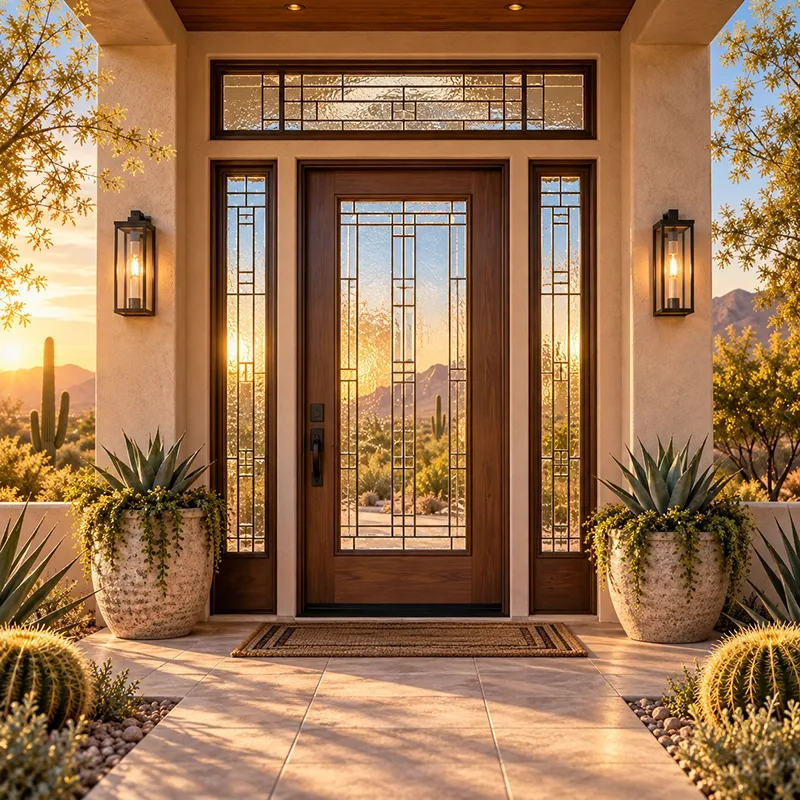
Compare light, privacy, decorative details, and glass choices.
Explore Glass Options
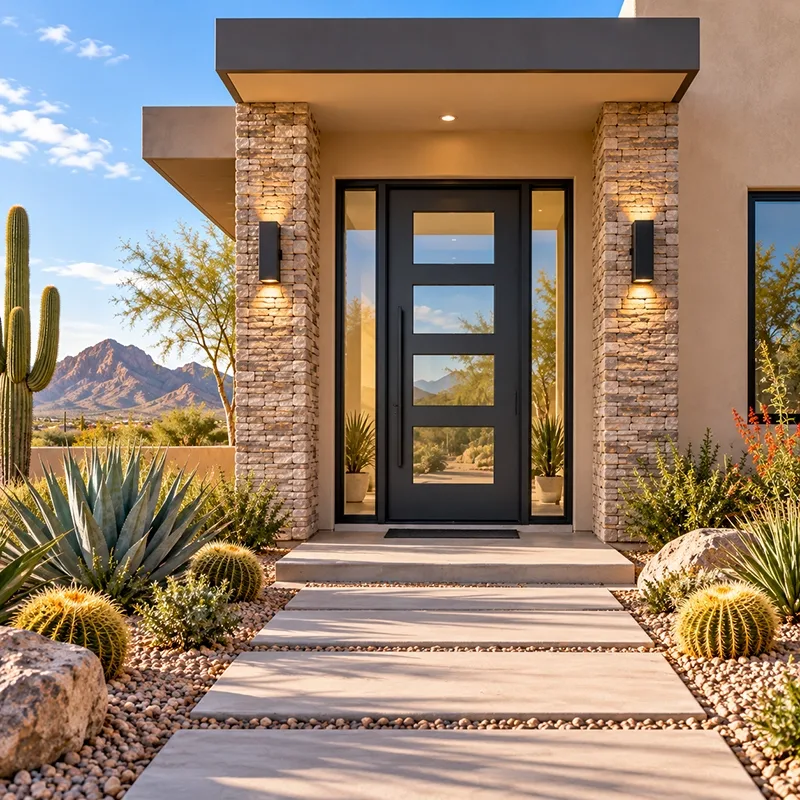
Learn what to compare when choosing a door for your home.
Read the Energy Guide
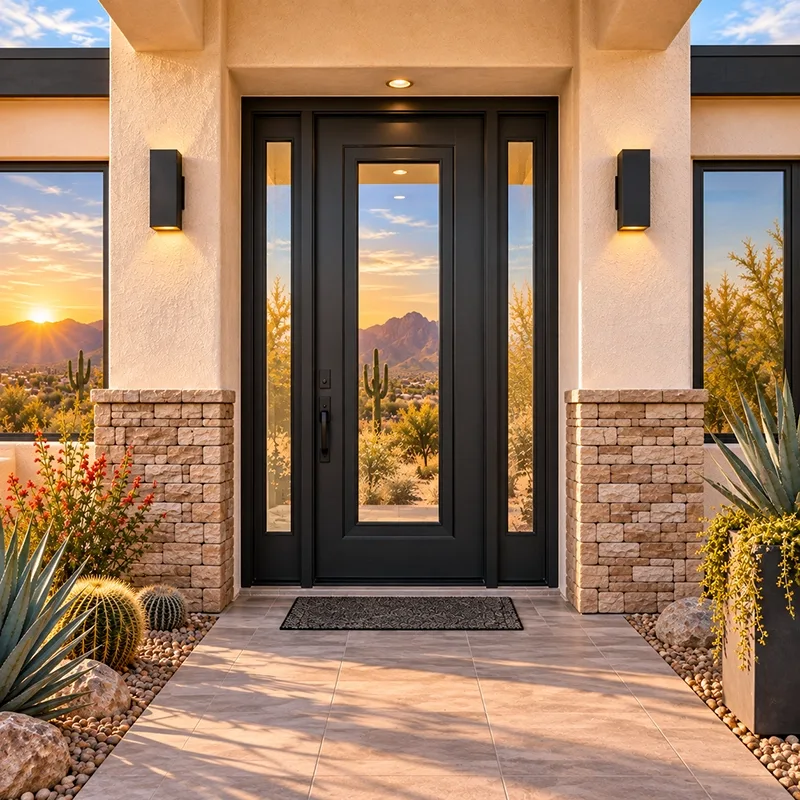
Compare fiberglass and steel for your home’s exposure and style.
Compare Door MaterialsCommon warning signs include drafts, fog between glass panes, damaged frames, difficult operation, failed locks, excessive heat near the glass, and several age-related problems appearing at the same time. A professional evaluation can help determine whether repair or replacement is the better option.
Yes. A shaded north-facing entrance may experience very different sun exposure from a west-facing entrance receiving strong afternoon sunlight. Door orientation can be worth considering when selecting the material, exterior finish, amount of glass, and available energy-efficient glass options.
Lower Solar Heat Gain Coefficient values indicate that less solar heat passes through the window. Because Phoenix has a hot, sunny climate, homeowners should pay particular attention to SHGC when comparing window options. The appropriate rating can vary by product, window orientation, home design, and current ENERGY STAR requirements, so compare the NFRC ratings for the exact windows you are considering.
Low-emissivity, or Low-E, coatings are thin coatings applied to window glass that help manage radiant heat transfer. Different Low-E formulations are designed for different climates and performance goals, including helping reduce solar heat entering a home.
Fog or condensation trapped between panes can indicate that the seal of an insulated glass unit has failed. Whether the glass unit can be addressed separately or the complete window should be replaced depends on the window’s construction, condition, age, and availability of replacement components.
Not necessarily. One window can be replaced when a problem is isolated. Replacing multiple windows may make sense when they are similar in age, share the same problems, or when you want consistent appearance and performance throughout the home.
Popular choices include sliding, double-hung, casement, awning, picture, bay and bow, and architectural windows. The best configuration depends on the room, ventilation needs, opening size, architecture, views, and how you want the window to operate.
Modern window glass can be configured to reduce solar heat gain compared with many older window systems. ENERGY STAR specifically recommends considering lower SHGC products for hot climates and paying particular attention to windows exposed to direct east, south, and west sunlight.
Compare the complete window rather than just the number of glass panes. Look at the window style, frame construction, glass package, Low-E coatings, U-Factor, SHGC, air leakage rating, warranty, installation method, and NFRC performance label.
In many situations, yes. Depending on the existing opening and project requirements, homeowners may be able to change from one operating style to another or incorporate fixed, casement, sliding, architectural, or other configurations. Your installer can evaluate the opening and available options.
The installation schedule depends on the number and type of windows, their sizes, existing conditions, access, and any additional finishing work required. Your replacement-window contractor should review the expected installation process and schedule before work begins.
Durable Doors & Windows provides professional window replacement for homeowners in the Phoenix area. We can help you evaluate your existing windows, explore window and glass options, measure your openings, and professionally install the replacement windows selected for your home.