
How to Choose an Energy-Efficient Entry Door for a Phoenix Home

Choosing a new front door in Phoenix involves more than finding the right color or style. With intense sunshine, long periods of high temperatures, and air conditioning working hard for much of the year, the performance of your entry door can affect comfort around one of the most frequently used openings in your home.

A well-designed energy-efficient entry door combines an insulated door slab, properly selected glass, quality weatherstripping, a well-sealed threshold, a durable exterior finish, and professional installation.

Instead of looking at one feature by itself, Phoenix homeowners should consider the entire entry door system.

If your existing door is worn, poorly sealed, difficult to operate, or no longer performing as it should, replacing it with a properly fitted energy-efficient entry door can improve comfort while also giving your entrance a completely new appearance.

How to Choose an Energy-Efficient Entry Door for a Phoenix Home

Choosing a new front door in Phoenix involves more than finding the right color or style. With intense sunshine, long periods of high temperatures, and air conditioning working hard for much of the year, the performance of your entry door can affect comfort around one of the most frequently used openings in your home.

A well-designed energy-efficient entry door combines an insulated door slab, properly selected glass, quality weatherstripping, a well-sealed threshold, a durable exterior finish, and professional installation.

Instead of looking at one feature by itself, Phoenix homeowners should consider the entire entry door system.

If your existing door is worn, poorly sealed, difficult to operate, or no longer performing as it should, replacing it with a properly fitted energy-efficient entry door can improve comfort while also giving your entrance a completely new appearance.

Quick Answer:

The best energy-efficient entry door for a Phoenix home is well-insulated, properly sealed, and built for the desert climate.

Look for a low U-factor heat gain coefficient (SHGC), quality weatherstripping, and professional installation to maximize energy efficiency and long-term performance.

Why Energy-Efficiency Matters

In Phoenix’s hot and sunny climate, your entry door plays a bigger role in comfort and energy costs than you might think. Here are the key reasons:

Heat Transfer Through The Door

Poorly insulated doors allow heat to move inside, making your AC work harder.

Excellent Weather Resistance

Air Leakage Around The Opening

Gaps and poor sealing let hot air in and cool air out, reducing efficiency.

Solar Heat Through Door Glass

Glass can absorb solar heat, increasing indoor temperatures if not properly rated.

What Should Phoenix Homeowners Look for in an Energy-Efficient Entry Door?

Replacement doors design for most Phoenix homes, there are six important areas to consider when comparing replacement entry doors.

1. Insulated Door Construction

The door slab itself is the starting point.

Modern fiberglass and steel entry doors are commonly constructed with insulated cores designed to reduce heat transfer through the door. This provides a significant advantage over older, poorly insulated doors or doors that have deteriorated over time.

In Phoenix, where the exterior surface of an entry door may be exposed to intense heat and sunshine, quality construction helps create a more effective barrier between the outdoor environment and the conditioned interior of your home.

Look beyond the surface appearance of the door. Two doors that look similar can have very different construction and energy-performance characteristics.

Glass can transform the appearance of an entry door and bring natural light into a foyer, but the glass package also becomes an important part of the door’s overall performance.

Energy-efficient entry-door glass may incorporate features such as insulated glass units, multiple panes, Low-E coatings, and other technologies designed to reduce unwanted heat transfer and solar heat gain.

This becomes particularly important as the amount of glass increases.

A door with a small decorative lite has different performance considerations than a nearly full-glass entry door or an entrance with large sidelites and a transom.

Phoenix homeowners do not necessarily need to avoid door glass. Instead, choose the **right glass package for the amount of glass and exposure of the entrance**.

Even an excellent insulated door can lose some of its advantage if outside air can move around the edges.

Weatherstripping creates a seal between the operating door and its frame when the door is closed. It should create consistent contact around the perimeter without preventing the door from operating smoothly.

Older weatherstripping may become compressed, damaged, loose, or brittle over time.

When comparing replacement doors, consider the entire sealing system rather than focusing solely on the door slab.

Good weatherstripping helps reduce air infiltration around the opening and can make the area near the entrance feel more comfortable.

The bottom of the door is another important part of the entry system.

The threshold works with the door sweep to close the gap underneath the door. If this area is poorly adjusted or improperly sealed, outside air can find its way into the home even when the rest of the door is performing correctly.

A properly installed threshold should provide a consistent seal while still allowing the door to open and close normally.

During an entry door replacement, the installer should evaluate the sill area, threshold, door sweep, and surrounding opening rather than simply installing a new slab into a poorly performing opening.

Energy efficiency is not determined by paint color alone, but the exterior finish remains an important consideration for Phoenix homes.

An exposed front entrance can receive substantial sunlight throughout the day. Selecting a quality factory-applied finish that is appropriate for the product and the conditions around the entrance helps protect the appearance of the door.

Consider how much direct sunlight the entrance receives, whether the door is protected by a porch or overhang, and how exposed it is to the elements when choosing your finish.

This is especially important when selecting dark colors, stains, or woodgrain appearances for heavily exposed entrances.

A high-performance entry door still needs to fit the opening correctly.

Precise measurements, proper frame positioning, insulation around the frame, correctly adjusted weatherstripping, and a properly sealed sill all contribute to the completed door system.

Installation problems can create gaps and air leakage that undermine the performance of the product itself.

That is why energy-efficient entry door replacement should be viewed as a **door-system project**, not simply a door-slab purchase.

How to Read Energy Ratings on an Entry Door

Homeowners comparing energy-efficient doors will often encounter terms such as U-factor, SHGC, ENERGY STAR, and NFRC.

Understanding a few basic terms makes comparing doors much easier.

U-Factor

U-factor measures the rate of heat transfer through a product. In simple terms, a lower U-factor represents better resistance to heat transfer. Rather than assuming one door material automatically performs better than another, compare the performance rating of the specific door configuration you are considering. Glass size, glass package, door construction, frame components, and other options can affect the final rating.

Solar Heat Gain Coefficient — SHGC

Solar Heat Gain Coefficient, usually shortened to SHGC, indicates how much solar heat passes through the product. A lower SHGC means less solar heat is transmitted. SHGC becomes particularly relevant when an entry door contains substantial glass and is exposed to direct sunlight.

ENERGY STAR and NFRC Ratings

ENERGY STAR-certified entry doors meet efficiency requirements established for qualifying products, while NFRC ratings provide standardized performance information that homeowners can use when comparing products. When shopping for a replacement door, ask to see the performance information for the actual configuration you are considering, especially when adding door glass, sidelites, or other options. Do not assume that every configuration within a product line has exactly the same rating.
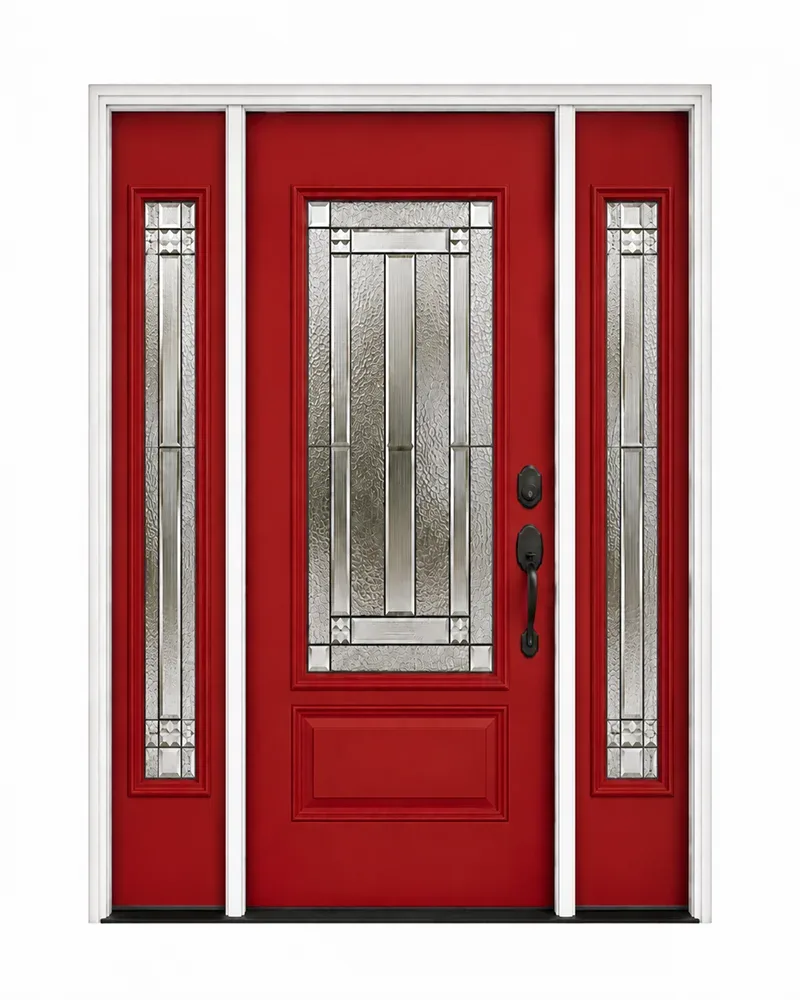
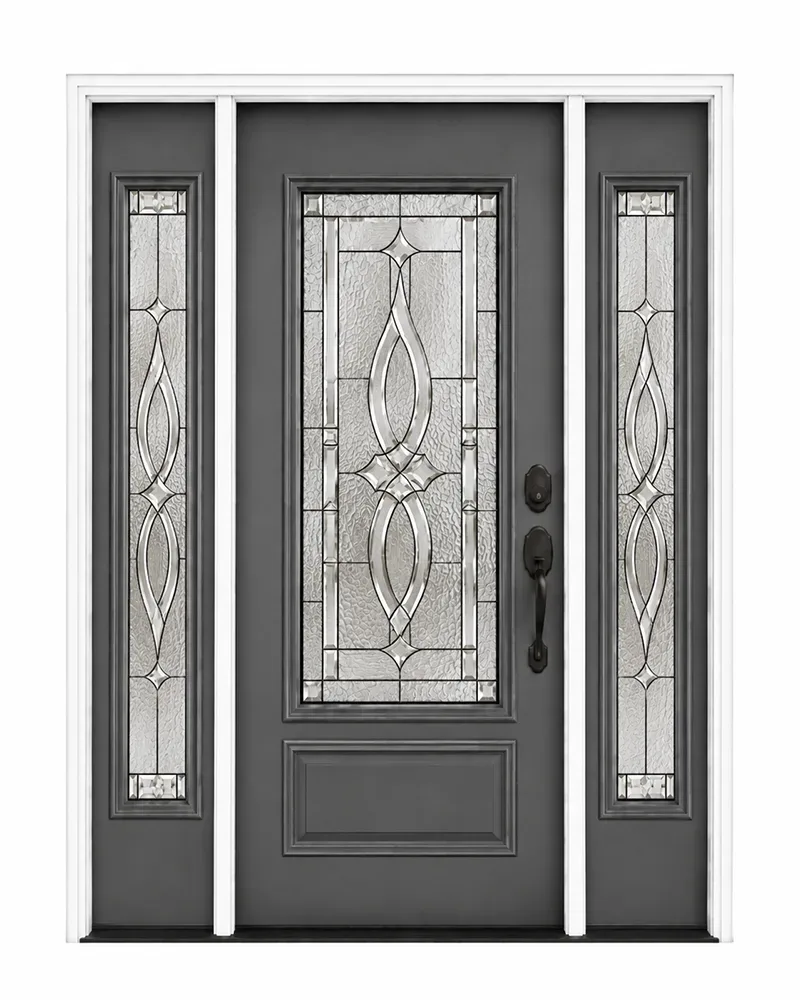
Fiberglass vs. Steel: Which Is More Energy-Efficient in Phoenix?

Fiberglass and steel are both excellent options for energy-efficient entry door replacement.

The important point is that door material alone does not determine energy performance.

The insulated core, glass package, frame, weatherstripping, threshold, configuration, and installation all contribute to the completed system.

When to replace a front door in Phoenix

Fiberglass Entry Doors

Fiberglass entry doors are popular with Phoenix homeowners because they combine insulated construction with excellent design flexibility and low maintenance.

They can provide the appearance of stained wood without requiring the maintenance associated with a traditional wood door.

Fiberglass doors are available in smooth and realistic woodgrain finishes, along with numerous panel designs, colors, glass styles, sidelites, and transoms.

Decorative Glass for Steel Door replacement

Steel Entry Doors

Steel entry doors provide another strong option for Phoenix homes.

Modern steel doors combine a durable exterior surface with insulated construction and can provide excellent energy performance when paired with the appropriate frame, glass, sealing system, and installation.

Steel is especially attractive to homeowners looking for a clean painted appearance, durability, and a strong entry system.

Rather than selecting solely by material, compare the complete fiberglass and steel door systems available for your home.

Does Adding Glass Make an Entry Door Less Energy-Efficient?

Not necessarily—but the amount and type of glass matter.

A solid insulated door has different performance characteristics than a door containing a large glass area. As more glass is added, selecting an energy-efficient glass package becomes increasingly important. Here are some entry door glass options that are available.

Low-E Door Glass

Low-E Door Glass

Low-E coatings are designed to help control radiant heat transfer through glass. For a Phoenix entrance exposed to significant sunlight, an appropriate Low-E glass package can be an important component of the overall door system.

Insulated Glass

Insulated Glass

Multiple panes of glass separated by an insulating space can provide better thermal performance than basic single-pane glass. Depending on the door and glass design, different energy-efficient glazing packages may be available.
Decorative, Privacy and Specialty Glass

Decorative, Privacy and Specialty Glass

Choosing an energy-efficient door does not mean giving up decorative options. Privacy glass, decorative glass, art glass, clear glass, and doors with internal blinds can all provide different combinations of appearance, natural light, privacy, and performance. The key is to compare the energy characteristics of the complete door-and-glass configuration, not simply the appearance of the glass.

Consider the Location and Exposure of Your Front Door

Two Phoenix homes can use the same entry door and expose it to very different conditions.

Before choosing your replacement door in Phoenix, look at the entrance itself.

How Much Direct Sun Does the Door Receive?

A heavily exposed entrance that receives hours of direct sunlight deserves additional consideration when selecting glass and exterior finishes. If the entrance contains a large amount of glass, solar heat gain becomes especially important.

Years of Everyday Use

Is the Entrance Covered?

A deep porch or overhang can provide substantial protection for an entry door. An uncovered entrance receives greater exposure to sunlight and weather, making material, glass, finish, and installation details even more important.

How Much Glass Do You Want?

Natural light can dramatically improve an entryway, but there is no single glass configuration that is right for every Phoenix home. A homeowner prioritizing maximum privacy and thermal performance might choose less glass, while another homeowner may prefer a larger decorative or privacy-glass design. The goal is to balance **natural light, appearance, privacy, and energy performance**.


Don't Overlook the Door Frame and Sealing System

Homeowners naturally focus on the door itself, but an entry system includes much more than the slab.

The frame, weatherstripping, threshold, sweep, glass, hardware, and installation all work together.

If an existing frame is damaged, out of square, deteriorated, or poorly sealed, installing a new slab alone may not correct the underlying problem.

A complete replacement gives the installer an opportunity to evaluate the opening and create a properly fitted entry system.

This is especially important if your old door has persistent drafts, daylight around the perimeter, difficulty closing, or noticeable gaps around the frame.

7 Things to Check Before Buying an Energy-Efficient Entry Door

Before choosing your new Phoenix entry door, use this simple checklist, whether you choose between single vs double entry doors.

Check Doors Energy Rating

1. Check the Door's Energy Ratings

Choose a quality fiberglass or steel entry door with construction designed for energy-efficient performance.

Look for Insulated Construction

2. Look for Insulated Construction

Choose a quality fiberglass or steel entry door with construction designed for energy-efficient performance.

3. Evaluate the Glass Package

If your door contains glass, consider Low-E coatings, insulated glazing, and the total amount of glass in the entrance.

4. Inspect the Weathersealing System

Look at how the door seals around the top, sides, and bottom when closed.

Consider the Threshold and Door Sweep

5. Consider the Threshold and Door Sweep

These components should work together to reduce air leakage underneath the door.

Match the Finish to the Entrance

6. Match the Finish to the Entrance

Consider direct sunlight, exposure, porch coverage, door color, and the manufacturer's recommendations when selecting a finish.

Include Professional Installation

7. Include Professional Installation

Proper measurements, frame alignment, insulation, sealing, threshold adjustment, and final door adjustment are essential parts of the completed entry system.

Energy-Efficient ProVia Entry Doors for Phoenix Homes

Durable Doors & Windows offers several ProVia entry door collections that give Phoenix homeowners options for combining appearance, durability, energy efficiency, glass, and customization.

Signet® Fiberglass Entry Doors

Signet fiberglass doors provide extensive customization with smooth and realistic woodgrain finishes, numerous door styles, glass designs, sidelites, transoms, colors, stains, and hardware options. For homeowners who want the appearance of a premium wood entrance with the lower-maintenance characteristics of fiberglass, Signet provides considerable design flexibility.

Ascent™ Fiberglass Entry Doors

Ascent fiberglass entry doors provide another option for homeowners who prefer fiberglass construction. The collection includes smooth and White Oak-inspired woodgrain appearances along with multiple styles, glass configurations, finishes, and custom sizing options.

Legacy™ Steel Entry Doors

Legacy steel doors provide durable steel construction with smooth and woodgrain-textured options. They can be configured with or without glass and offer a wide selection of finishes, styles, and entry configurations. Whatever collection you choose, compare the energy rating of the actual door configuration rather than selecting a product solely by brand or material.
Energy-Efficient Entry Doors in Phoenix

Choosing the Right Energy-Efficient Door for Your Phoenix Home

There is no single front door that is ideal for every Phoenix home.

The right choice depends on your entrance, sun exposure, architectural style, preferred amount of glass, privacy needs, maintenance preferences, and budget.

A good replacement-door consultation should look at the entire opening and help you answer questions such as:

Taking the time to evaluate these factors can help you choose a replacement entry door that looks beautiful while providing the performance your Phoenix home needs.

Ready to Replace Your Entry Door in Phoenix?

If your current front door is drafty, damaged, difficult to operate, poorly sealed, or simply no longer fits the appearance of your home, Durable Doors & Windows can help you explore replacement options.

Our Phoenix team can help you compare fiberglass and steel entry doors, glass options, finishes, sidelites, transoms, hardware, energy-efficient configurations, and other features to create an entry system designed around your home.

Schedule a no-obligation consultation to explore entry door replacement options for your Phoenix home.

FAQ's About Energy-Efficient Entry Doors in Phoenix

1. What makes an entry door energy-efficient?

An energy-efficient entry door combines insulated construction with properly selected glass, effective weatherstripping, a well-sealed threshold, a properly fitted frame, and quality installation. The performance of the entire entry system is more important than any single feature.

Yes. Quality fiberglass entry doors can provide excellent energy performance when they include insulated construction and are properly fitted and installed. Fiberglass also provides extensive design and woodgrain-finish options with relatively low maintenance.

Yes. Modern insulated steel entry doors can provide excellent energy performance. As with fiberglass, the final performance depends on the complete configuration, including the glass, frame, threshold, weatherstripping, and installation.

Lower U-factor values indicate less heat transfer through the product. Rather than choosing one universal number, compare the NFRC ratings and ENERGY STAR certification of the exact door configurations you are considering because glass size and other options can change the rating.

The amount and type of glass can affect overall door performance, but homeowners do not have to avoid glass. Energy-efficient glazing packages, including insulated glass and Low-E options, allow you to balance natural light and design with energy performance.

Low-E glass can be particularly useful for doors exposed to significant sunlight because the coating is designed to help control radiant heat transfer. The best glass package depends on the size and orientation of the glass and the overall door configuration.

Sometimes. If the door itself is still in good condition and the primary problem is worn weatherstripping, replacing or adjusting the seals may improve performance. If the door is warped, damaged, poorly fitted, or has other significant problems, complete replacement may make more sense.

Color is not a substitute for good insulation, energy-efficient glass, weathersealing, or proper installation. However, sun exposure should be considered when selecting an exterior finish. Choose a finish appropriate for the product and the conditions around your entrance.

Yes. Even a high-performance door can develop air-leakage problems if the frame is not positioned correctly, the opening is poorly sealed, or the threshold and weatherstripping are not properly adjusted. Installation is an important part of the overall door system.

Minor issues such as worn weatherstripping or a simple adjustment may sometimes be repairable. Replacement becomes more appropriate when the door has persistent drafts, warping, damage, poor fit, deteriorated components, outdated glass, or recurring operating problems. For a more detailed checklist, see our guide, “9 Signs It’s Time to Replace Your Front Door in Phoenix.”

Related Phoenix Guides

Best Entry Doors for Phoenix Heat

Compare fiberglass and steel entry doors for Phoenix homes, including heat resistance, maintenance, energy efficiency, and design options.

Entry Door Replacement in Phoenix, AZ

Explore professionally installed fiberglass and steel replacement doors, glass options, sidelites, transoms, finishes, and configurations for Phoenix homes.

Fiberglass vs. Steel Entry Doors

See the key differences between fiberglass and steel entry doors, including durability, maintenance, appearance, security, and energy performance.
Privacy Policy | Terms of Service