
Entry Door Glass Options for Denver Homes: A 2026 Homeowner’s Guide
Glass changes how a front door looks, how much light reaches your entry and how private the space feels. In Denver, it also affects how the door performs in cold weather and how it handles strong sun, and since 2026 it can affect which doors meet Colorado’s energy standard.
Explore Denver Entry Doors
Which Entry Door Glass Is Best for a Denver Home?
The best glass depends on what you want from the entry. Clear glass gives the most light and view, privacy glass keeps the entry discreet, decorative and art glass add character, and a solid door with no glass is the simplest and most insulating choice. Whatever you pick, ask for the energy ratings of the exact glass package, because glass insulates less well than the door slab around it.
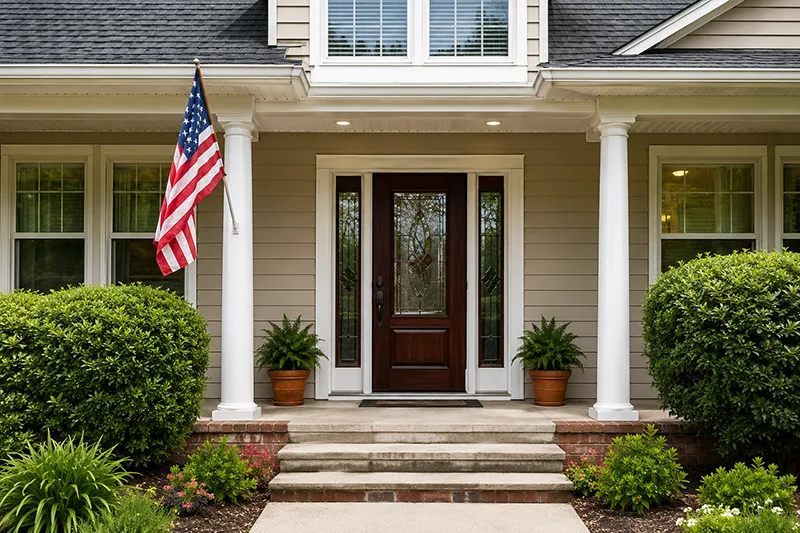
Types of Entry Door Glass
Five entry door glass options
- Clear glassThe most light and view, with less privacy
- Privacy glassFrosted, textured or obscure; light without a clear view
- Decorative glassPatterns, beveling or caming
- Art glassColored or patterned panels for a focal point
- Internal blindsSealed between the panes, depending on the door
Clear Glass
Clear glass lets in the most daylight and gives a view of the porch. It suits entries with covered porches or landscaping that offer privacy, and it works well for homes that want a bright, open feel. The tradeoff is less privacy and, depending on the glass package, more heat loss in winter.
Privacy Glass
Privacy glass, such as frosted, textured or obscure patterns, lets light in while blocking a clear view of the inside. It is a practical choice for entries that face the street or sit close to neighbors, and for glass placed near the door handle.
Decorative Glass
Decorative glass uses patterns, beveling or caming to add detail while still letting light through. It suits traditional and craftsman-style homes, and it can bring character to an otherwise simple door.
Art Glass
Art glass uses colored or patterned panels for a more distinctive look. It tends to be the most eye-catching option and works well when the door is meant to be a focal point of the home’s exterior.
Glass With Internal Blinds
Some doors offer blinds sealed between the panes of glass, which can adjust privacy and light without anything to dust or clean. Availability depends on the door, so ask what is offered for the product you choose.
Sidelites and Transoms
Sidelites are the narrow glass panels beside the door, and transoms sit above it. They bring in more light and make the entry feel larger. They also add glass area, which affects insulation and may bring the door under Colorado’s glazing rule. Privacy glass in sidelites is a common way to keep the light and limit the view.
How Does Door Glass Affect Winter Comfort?
Glass is the weak point for insulation in an entry door. The U.S. Department of Energy notes that multiple glass layers, low-emissivity (low-e) coatings and low-conductivity gas between the panes all help glass perform better. In a Denver winter, that translates to a warmer door surface and fewer cold spots near the entry. Ask for the U-factor of the door with its glass, not just the door slab, so you can compare options fairly.
What Does Colorado’s Glazing Rule Mean for Your Door Choice?
Colorado’s energy-efficiency standard for new residential windows and doors applies to products sold or leased for residential use on or after January 1, 2026. For doors, it covers those with more than 900 square inches of glazing, or a sidelite with more than 281 square inches of glazing. The rule’s definition includes three-quarter-lite and fully glazed doors and sidelites. Covered doors must have a U-factor of 0.30 or lower, and doors outside that definition are not required to meet it.
This means a door with a small decorative panel is outside the rule, while a full-lite door or a large sidelite may be covered. It does not require you to replace a door you already own. Ask your installer to confirm that the exact door and glass package meet the current requirements, and see the Colorado rule for the full text.
Sun, Fading and Privacy
Denver sits about a mile above sea level, where sunlight is strong. Glass lets that light in, and sunlight can fade furniture and flooring near the entry over time. Low-e coatings can help reduce this, so ask what coating is included. For privacy, think about what the glass shows from the street and from the porch, and where the glass sits in relation to the lock.
Matching Glass to Common Denver Home Styles
- Brick bungalows and Denver Squares: Decorative or beveled glass fits the traditional character.
- Mid-century and ranch homes: A narrow clear or privacy lite suits the simple lines.
- Newer suburban and modern homes: Larger clear or privacy glass with clean lines fits the style.
If you live in a historic district or an HOA community, check exterior rules before ordering.
How to Choose Entry Door Glass
- Decide how much light you want and how private the entry should be.
- Think about what you can see through the glass from inside.
- Ask for the U-factor and other ratings of the door with its glass.
- Ask whether the door falls under Colorado’s glazing rule.
- Check where the glass sits relative to the lock.
- Compare how each option looks with your home’s style and color.
Frequently Asked Questions
What is the most private type of entry door glass?
Privacy glass, such as frosted, textured or obscure patterns, lets light in while blocking a clear view of the inside. A solid door with no glass is the most private option. Sidelites with privacy glass are a common way to keep the light and limit the view.
Does glass make an entry door less energy efficient?
Generally, yes, because glass insulates less well than the door slab. Multiple panes, low-e coatings and low-conductivity gas between the panes help. Ask for the rating of the whole door with its glass package so you can compare options fairly.
Does Colorado limit how much glass my entry door can have?
No. The state rule does not cap glass. It requires doors with more than 900 square inches of glazing, or a sidelite over 281 square inches, to have a U-factor of 0.30 or lower. Doors below that size are not required to meet it.
What is the difference between decorative and art glass?
Decorative glass uses patterns, beveling or caming to add detail while letting light through. Art glass uses colored or patterned panels for a more distinctive look. Exact terms vary by manufacturer, so look at samples in person to see how they look in your light.
Can I get blinds inside entry door glass?
Some doors offer blinds sealed between the panes, which adjust light and privacy without anything to dust. Availability depends on the door and manufacturer, so ask what is offered for the product you are considering, and whether it changes the door’s energy rating.
Will entry door glass fade my floors and furniture?
Strong sunlight can fade flooring and furniture near an entry over time, and Denver sits at an altitude where sunlight is strong. Low-e coatings can help reduce this, so ask what coating a door includes. Shades and window treatments inside also help.
Can sidelights use a different privacy glass from the door?
Ask whether your chosen door system offers different glass options for the panel and sidelights. Review both patterns together in daylight before ordering.
Does frosted glass hide silhouettes at night?
Privacy depends on the pattern, viewing distance, and lighting. Try viewing the sample with a light behind it to see how much detail is visible from outside.
What is the difference between clear, textured, and tinted door glass?
Clear glass provides the most direct view. Textured glass distorts the view, and tint changes the brightness or color of the light. Test samples for the privacy level you want.
Can I replace the glass without replacing the whole door?
Some doors accept a compatible replacement glass insert. Ask a dealer to check the existing panel, opening dimensions, and manufacturer options before ordering.
How much light will a half-lite or full-lite door bring in?
A full-lite design generally offers a larger glazed area. Your overhang, the direction the door faces, and the glass pattern also affect how bright the entry feels.
How should I compare glass samples before placing an order?
Look at them from both sides, at the distance a visitor would stand, in daylight and with lights on indoors. Check the color and clarity alongside your chosen door finish.
Related Articles
Keep planning with these door and window guides.
Choosing a Window Replacement Company in Denver
Compare installers, written estimates, and warranty terms.
Read the Company Guide
Window Replacement Cost in Denver
Understand the details that affect your window project budget.
Explore Window Costs
Drafty Doors and Windows: When to Replace
Explore common comfort problems and replacement signs.
Read the Comfort Guide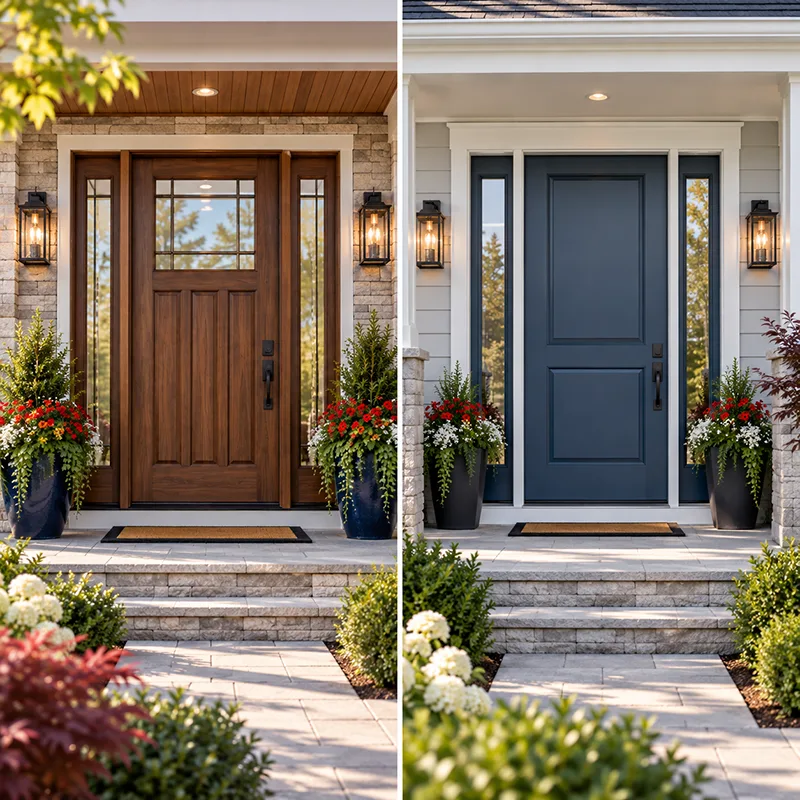
Fiberglass vs. Steel Entry Doors
Compare appearance, maintenance, and material options.
Compare Door MaterialsReady to Plan Your Denver Project?
Talk through product options, installation and pricing with our Denver team.
Denver Door & Window Replacement · Denver Entry Door Replacement · Denver Window Replacement · Denver Homeowner Guides
Request a Free EstimateCall (303) 653-9560